Telangana Finance Minister Harish Rao accused the central government of covertly reducing paddy procurement targets, raising concerns about its impact on farmers.
He urged transparency and accountability in the procurement process.

Telangana Finance Minister Harish Rao accused the central government of covertly reducing paddy procurement targets, raising concerns about its impact on farmers.
He urged transparency and accountability in the procurement process.
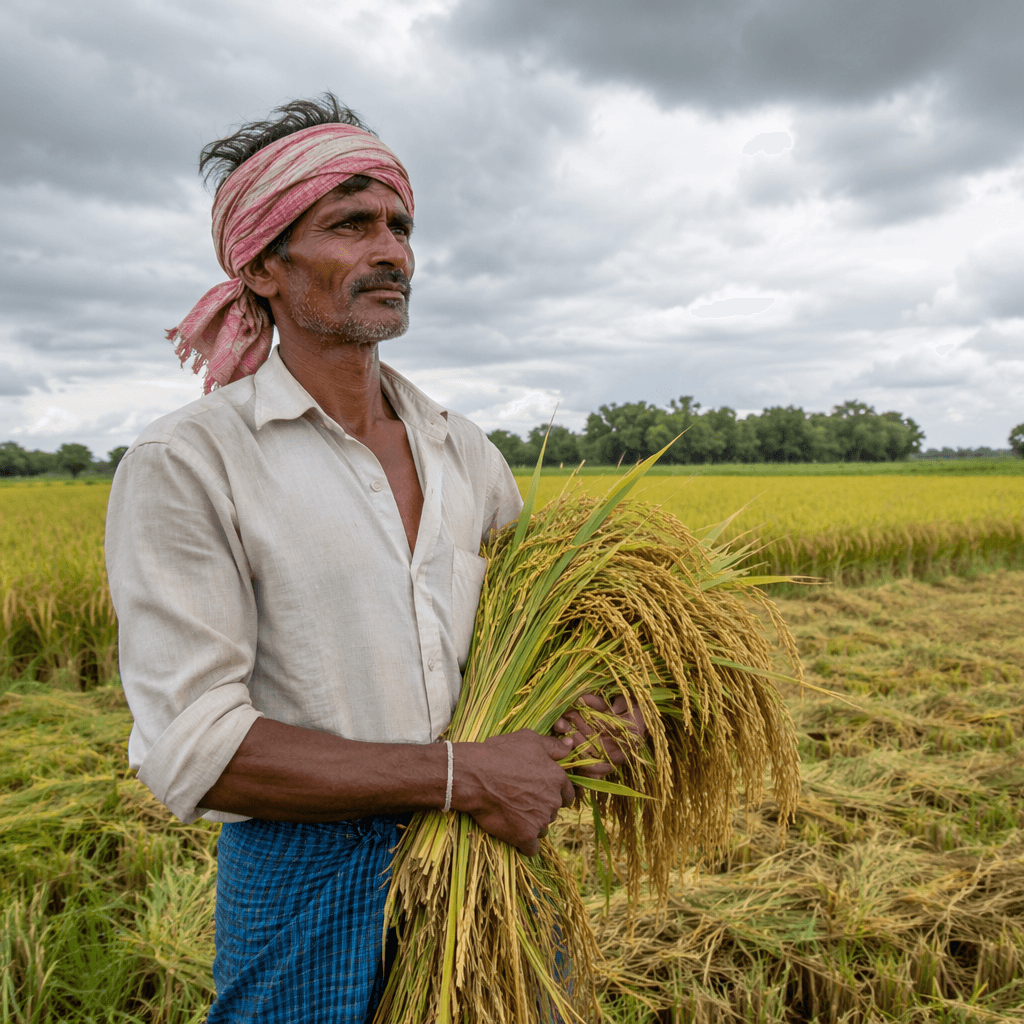
AI-generated illustration · NewsDarpan (GPT-Image-2)
Telangana Finance Minister T. Harish Rao has accused the central government of quietly lowering paddy procurement targets, a move he claims could severely impact farmers dependent on the Minimum Support Price (MSP) system. Speaking at a public event, Rao alleged that the reduction in targets was being carried out without proper consultation or transparency, leaving farmers in a precarious position.
Rao emphasized that paddy cultivation is a lifeline for millions of farmers in Telangana and other states, and any reduction in procurement targets could lead to significant financial distress. He urged the central government to clarify its stance and ensure that farmers are not left in the lurch. "The government must act responsibly and uphold its commitment to farmers," he stated, adding that such decisions should be made in consultation with state governments and stakeholders.
The minister also called for greater accountability in the procurement process, highlighting the need for clear communication to avoid confusion among farmers. Rao's remarks come amid growing concerns over agricultural policies and their impact on rural livelihoods. The issue has sparked debates across political lines, with opposition parties criticizing the central government for its handling of agricultural procurement.
The central government has yet to respond to these allegations. Farmers and agricultural experts are closely monitoring the situation, as any changes to procurement policies could have far-reaching consequences.